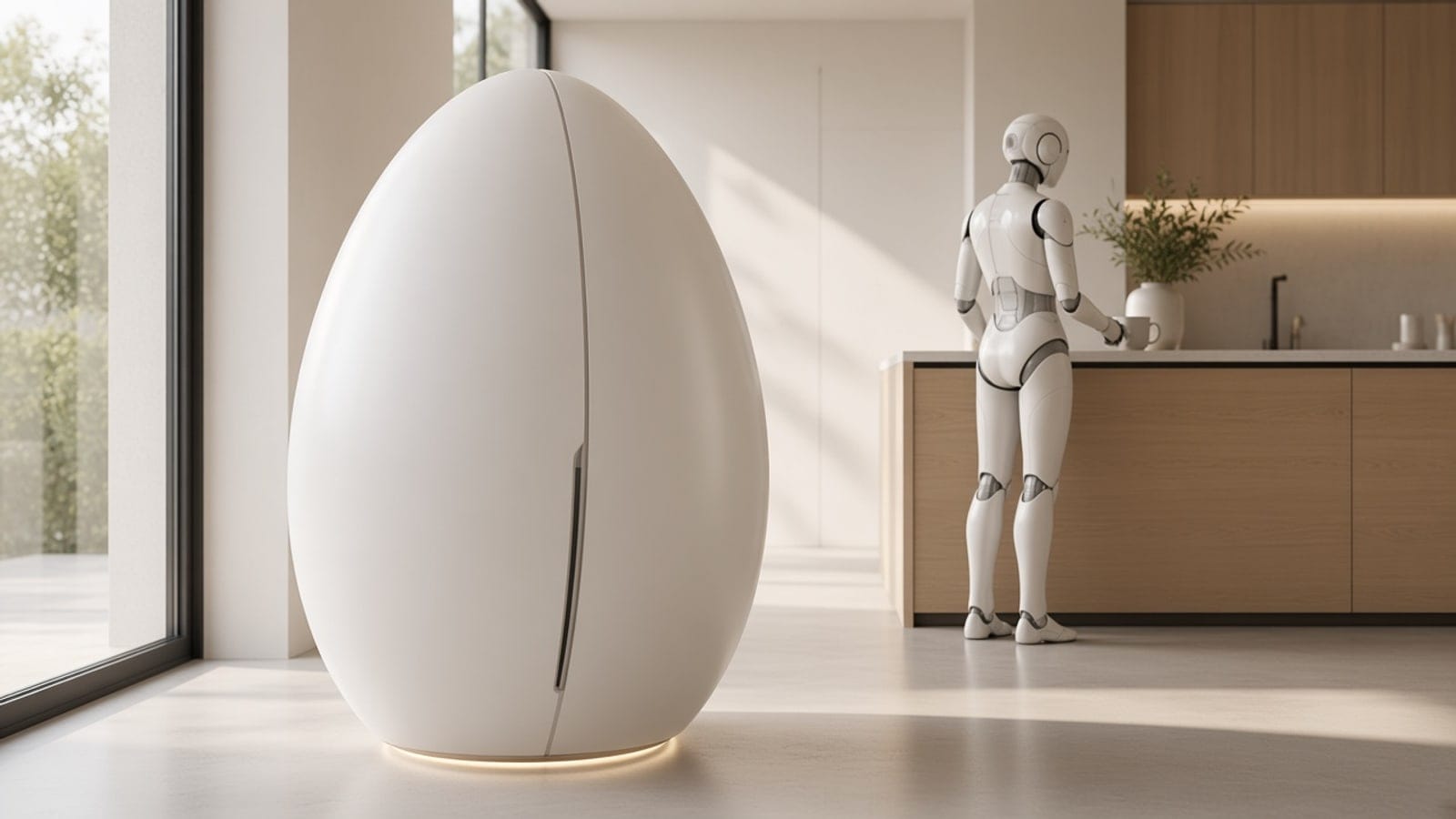
The home robot has arrived as a purchasable product. 1X opened pre-orders for NEO, a 5-foot-6 humanoid, in October 2025 at $20,000 outright or $499 a month with a refundable $200 deposit, with U.S. deliveries slated to begin in 2026. NEO can do a growing list of everyday tasks — opening doors, fetching items, turning off lights — but 1X is candid that it is not fully autonomous: for chores it doesn’t yet know, a human “Expert” teleoperator connects remotely to guide it, which both gets the job done and generates training data. Figure has signaled home ambitions for its Figure 03 platform, and Tesla has floated consumer versions of Optimus, though neither is a shipping consumer product.
Around the humanoids sits a whole ecosystem of narrower home robots. Sunday Robotics’ Memo, Weave Robotics’ Isaac (a wheeled home assistant priced below NEO), and Prosper target household chores; Samsung’s Ballie is a rolling home-AI companion; Amazon’s Astro had a troubled consumer path; Matic builds an autonomous vacuum with on-device vision; and Roborock and Dreame have shown robot vacuums sprouting manipulator arms. Assistive home robots for elderly and disabled users — the segment where a reliable helper is not a luxury but independence — are a particular focus, overlapping with the BCI and prosthetics stories elsewhere in this series.
But the home robot introduces a privacy problem sharper than any smart speaker. NEO’s own model illustrates it: even with 1X’s stated safeguards — face-blurring, “no-go” zones, approval-gated sessions, U.S.-based operators — a remote human can, by arrangement, see inside your home and operate a machine within it, and session footage is retained to train the AI. Multiply that across cloud cameras, always-listening microphones, and manufacturer-controlled software, and the family living room becomes a data-collection surface owned by someone else.
The ownership case compounds the privacy case. A household robot has arms, wheels or legs, and the run of your home. Its intelligence — the model that decides what to grab, where to move, and when to stop — belongs with the family it works for, not on a server owned by someone else. If the internet drops, a home robot should keep working under local control rather than wait on a distant service. The person who owns the home should own the model and the data, on equal terms with anyone else who owns one.
That is the case for a single local, owner-controlled family cortex. Safeera’s Googie — Christmas-tree-sized, liquid-cooled, quiet, with sixteen RTX PRO 6000 Blackwell GPUs — is built to be the central intelligence for household robots: the place where the family’s models run and retrain, where cameras and sensors report to hardware the family owns, and where a physical power switch means exactly what it says. A home robot you can trust is one whose intelligence stays home.