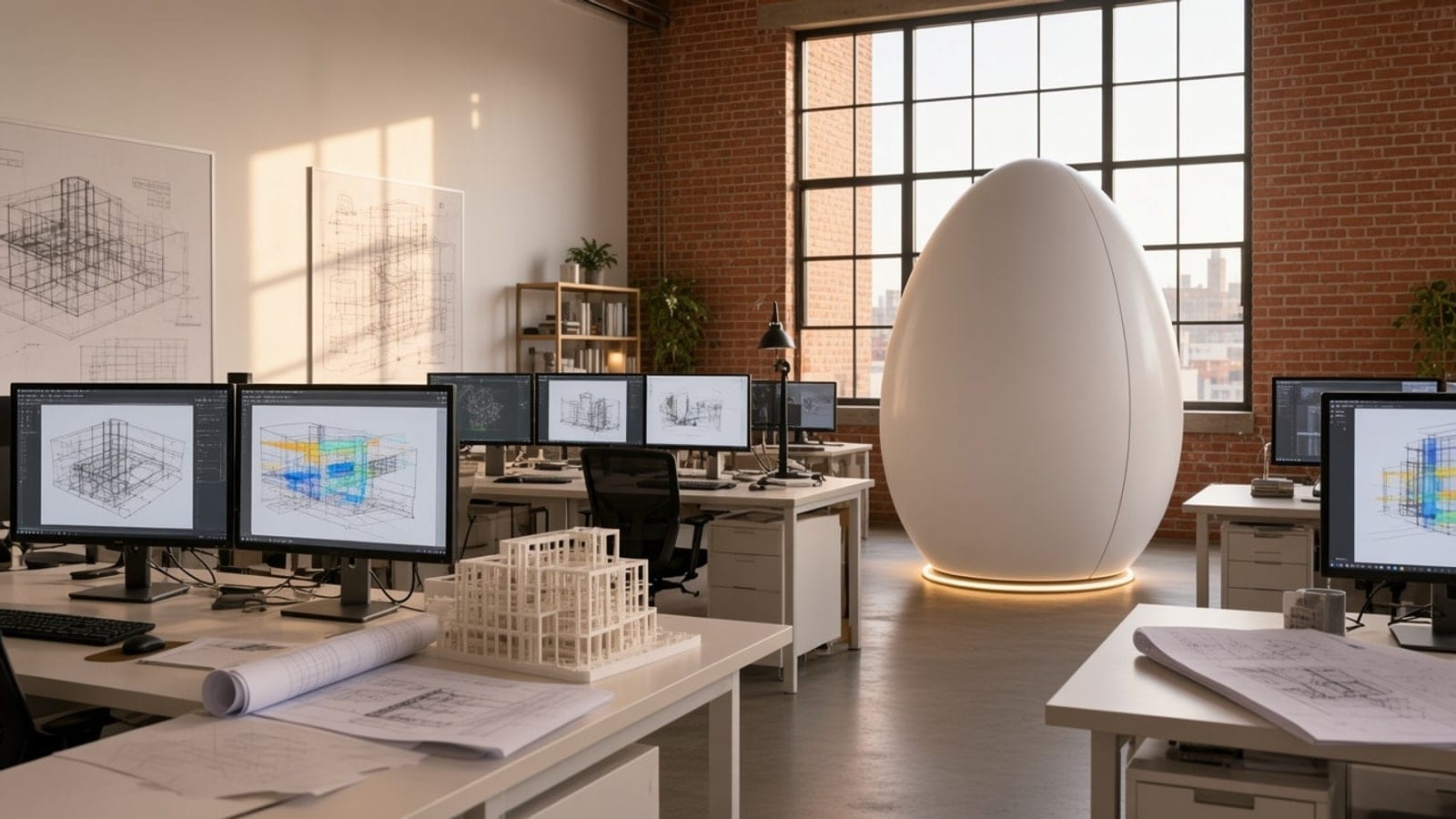
The economics of AI are quietly shifting in favor of ownership for small, compute-intensive firms. Engineering-simulation vendors have moved their flagship tools onto the Blackwell generation — Ansys, Cadence, and Siemens among them — so a mid-size mechanical, electronics, or fluid-dynamics team can now run in hours what once took a weekend on a cluster or a large cloud bill. Architecture and AEC firms use generative design and rendering; small film and design studios use local generative video and image models; and law and finance boutiques run retrieval-augmented generation (RAG) and AI agents over confidential documents they cannot legally or comfortably put in a public cloud.
The logic for a small firm is straightforward. As AI code assistants and agentic workflows lower the cost of building custom applications, it becomes practical to develop AI capabilities in-house, on infrastructure the firm owns. An appliance carries a fixed cost with predictable economics; cloud GPU rental is open-ended and scales with every experiment. Owned hardware also keeps the data private and keeps working when a provider does not.
Privacy and IP sharpen the case. An engineering firm’s simulation models, a studio’s unreleased footage, a law firm’s client files, and a fund’s trading logic are the business itself. Sending them to a shared cloud — where they may be logged, retained, or used to improve someone else’s model — is a risk many owners are no longer willing to take. Running the model locally means the data never leaves the office, the outputs are private, and the firm keeps custody of both.
There is also a resilience and cost-predictability argument that matters more to a small business than to a hyperscaler. A local appliance keeps working during an internet outage, does not meter every token, and turns a volatile operating expense into a known capital one. For firms in places with unreliable grids or expensive power, bundling the compute with its own energy supply removes the last external dependency.
That is exactly what Safeera’s Sparks is built for: sixteen B300 Blackwell Ultra GPUs at roughly 32 kW, delivered as a self-contained enclosure, with an optional solar array, battery, and backup generator so an engineer’s office, studio, or boutique can run frontier-class models on its own power and its own terms. It brings the in-house AI shift within reach of firms that will never build a data center — with the data, the model, and the switch staying in the building.